
A Critical Review: Poetry of Ada Limón, Billy Collins, Naomi Shihab Nye, Mary Oliver, Wendell Berry
Let’s talk about poetry!
But before we do, I am reminded of the ancient Chinese Tao Te Ching Verse Twenty-Nine:
Do you think you can take over the universe and improve it?
I do not believe it can be done.
The universe is sacred.
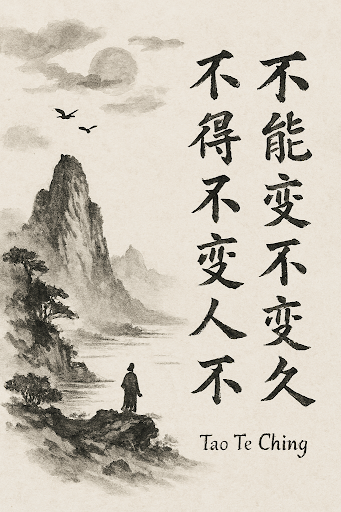
You cannot improve it.
If you try to change it, you will ruin it.
If you try to hold it, you will lose it.
So sometime things are ahead, and sometimes they are behind;
Sometimes breathing is hard, sometimes it comes easily.
Sometimes there is strength and sometimes weakness.
Sometimes one is up and sometimes down.
Therefore, avoid extremes, excesses, and complacency.
Taking my over-curious granddaughter into a gift shop, I hold her hand firmly and say,
“You can look at things, but don’t touch anything! You might break it. If you want something, point at it and Grandpa will hold it out for you.”
This, of course, is done with a high degree of drama and mock seriousness which the store clerks usually find quite funny – and then we always buy some little amusing thing. One time in an art store we spotted a little pack of colorful erasers and later I found out from her mother that she had unwrapped them and put them in her jewelry chest and was keeping them as treasures. Kids.
As we walk through the gift shop of poetry from our party, please do reach out and touch these fine poems of American Realism – copyright prevents us from posting them in full, but links to copyright approved sources will be provided so you can read them as I talk about them; they are all worthy of being collected and kept as treasures. These poems are all from relatively short collections and buying the books means you have them at your fingertips plus all the other poems we didn’t have time to work through at the party. And face it, poets need to sell books; if they sell enough maybe they’ll write more.
Ada Limón, The Carrying (2018 Milkweed Editions, milkweed.org)
Dead Stars
A New National Anthem
Instructions on Not Giving Up
Dandelion Insomnia
Ada Limón (born March 28, 1976) is an American poet and in 2022 was named the Poet Laureate of the United States a position she held until 2025. The official title is “Poet Laureate Consultant in Poetry to the Library of Congress. It is conferred on literary figures appointed to promote poetry nationwide. She holds degrees in drama and literature and pursued poetry full time after a successful 12-year marketing career in NY city.
When I first started looking into exploring the poetry of Ada Limón; wait, let me back up, I started looking into the poetry of Ada Limón while sizing up Jack W. Boyd’s poetry and was led to her when I searched on the internet for something I made up in my head I called American Realism Poetry which is what Jack’s poetry made me think of. Also, just by pure chance (it is said there are no accidents) I did have a copy of Ted Kooser’s “Delights and Shadows” and it’s awfully difficult to read Kooser and Boyd side by side and not think there is something called “American Realism” in poetry. So, I searched it and got an introduction to a handful of amazing American poets:
Ada Limón
Billy Collins
Naomi Shihab Nye
Mary Oliver
Wendell Berry
Jack W. Boyd
Now I doubt very much that any of these poets consider themselves, “American Realist” poets, they probably just think of themselves as poets. But we critics and analysts always gotta come up with names and labels and such, and yes, in one way or another, these poets and these poems are called “Realist” because their poetry is accessible, grounded, and emotionally resonant. Their writing is tightly crafted, gimmick-free, generally short poems, written in slim volumes. Generally.
They may even resist the label “Realist” as it carries a certain amount of 19th century baggage (Twain, Wharton, Howells). But I came up with “Realism” based on the 20th century painting movement of Hyperrealism where the artist paints hyper realistic paintings sometimes of everyday objects and those paintings first off, are very cool, but more than that, they force you to look into the everyday in sometimes excruciating detail and you can get a kind of waking vision of the immediate and obvious that results in wild visions of who-knows-what just by looking at say an unbelievable well rendered realistic painting of a salt shaker.
I got a general impression like this experience reading these poets; and weirdly enough, if you search for one under a topic they typically write about, others will pop up in the internet search as well. It’s as different as they are from one another, and none of them call themselves realists, on some internet algorithmic level they’re related. And when you read them, they’re all super accomplished craftsman, like those hyper realist painters, yet there’s a lot going on in these short, may I call them, “realistic” poems beyond expert writing.
Back to Ada Limón. In a word I stumbled upon her writing. I suppose I was looking for something like her because after all, I found her, and I read a little of her work online…initially I wasn’t too sure about her. Way in the back of my mind I was projecting that her poetry was all about nothing at all but pain, and she does write about pain, and all about suffering and there’s some of that as well, but there’s more and her writing never just settles down to some endless bummer-vibe like I was fearing (for some reason…). And then I read her poem “Dead Stars” and snapped out of my dogmatic slumbers and projection. This is a great poem, and I simply love this line:
We point out the stars that make Orion as we take out
the trash, the rolling containers a song of suburban thunder.
I stole that and now refer to those rolling trash cans as “thunder bins”. She has the uncanny ability to elevate the most mundane moments into something mythic and hilarious at once. A collision of the cosmic and the mundane.
In the poem “Instructions in Not Giving Up” we get a bouquet of lush botanic and springtime images expertly rendered and then she enters the poem at line 6 of the 13 lines:
…,it’s the greening of the trees that really gets to me…
and the last two lines are:
I’ll take it the tree seems to say, a new slick leaf
unfurling like a fist to an open palm, I’ll take it all.
Ada Limón will walk into her poems, and then when you start hearing her as a participant, she can subtly shift focus and you’re not sure if it’s her speaking directly from within the poem, or if she has retreated and the poem is playing itself out. This creates a kind of emotional echo; you feel her presence even when she’s no longer in the poetic narrative.
“Ada Limón will walk into her poems, and then when you start hearing her as a participant, she can subtly shift focus and you’re not sure if it’s her speaking”
I mean, in this poem she’s channeling the voice of the tree; but it’s a human voice that has seen the trials, endured the pain, yet it’s springtime and things are being reborn along with a renewed courage to do it all again. The ending, the slow greening of the leaves after the gaudy display of blossoms it’s the leaves and their slow steady greening we’re left with. Less flashy, more enduring and that last line is a vow to keep going. No matter what. Survival is reframed as an act of grace. She walks a thin line between vulnerability and strength, doesn’t flinch at the pain, but at the same time doesn’t let the pain define her.
The links below are to Ada Limón poems we read at the party, I couldn’t find “Dandelion Insomnia” online though, so you’re going to have to get yourself a copy of “The Carrying” to read it. There’re a lot of wonderful poems in that book.
We highly recommend Ada Limón.
Dead Stars by Ada Limón - Poems | Academy of American Poets
Instructions on Not Giving Up by Ada Limón - Poems | Academy of American Poets
A New National Anthem | The Poetry Foundation
Postscript: While on a Pacific Northwest road trip, we happened upon a small bookstore in McMinnville, Oregon, Third Street Books. My first question in situations like this is always, “do you have a poetry section?” and they did. It was well stocked with Ada Limón books, and I got a copy of “The Hurting Kind” and her anthology “You Are Here”. I’ve only had time to glance through a few pages of each, but they are looking to be first-class.
Billy Collins, The Trouble With Poetry and Other Poems (2007 Random House Trade Paperback Edition)
Special Glasses
The Lanyard
Billy Collins (22 March 1941 -) born William James Collins is an American poet, appointed as Poet Laureate of the United States from 2001 to 2003. He’s a Distinguished Professor at Lehman College of the City University of New York and is the Senior Distinguished Fellow of the Winter Park Institute, Florida. Collins was recognized as a Literary Lion of the New York Public Library (1992) and selected as the New York State Poet for 2004-2006.
We only read two of his poems at the party, since he’s the most famous poet we covered, and time was limited. Billy Collins writes the kind of poems you can sit around the table after dinner and go around the table and everybody gets a turn reading their favorite Collins poem. If we could ever get a dinner party together with people who are well versed in his poetry, that would really be a blast! His poems are sharp, even brilliant in their observation and elevation of the ordinary, but what would make the party so fun is much of his work is wickedly, uproariously, laughing out loud funny. Granted, his humor can have a sting, but what humor doesn’t? And they’re not “humor” poems, they’re just funny and very observant.
And they all aren’t necessarily funny, the two we read at the party certainly weren’t though they were rich with wry observation, I personally wouldn’t think of “Special Glasses” as being in any way funny, as to my reading it’s a poem about a bitter breakup. We talked about it at some length in our last edition of Poets and Troubadours, so we won’t cover it here.
The other poem we read, The Lanyard, arguably his most well-known, isn’t particularly “funny” but it did get a couple of laughs from moms in the audience. I just read it again, and I wept a bit it is very touching. It’s about the memory of weaving one of those silly, useless little things you do at summer camp:
…a past where I sat at a workbench at a camp
by a deep Adirondack lake
learning how to braid thin plastic strips
into a lanyard, a gift for my mother.
I had never seen anyone use a lanyard
or wear one, if that’s what you did with them,
but that did not keep me from crossing
strand over strand again and again
until I had made a boxy
red and white lanyard for my mother.
…
The poem is beautifully shaped and as it progresses, deepens into a meditation on caring and motherhood. I won’t ruin it for you, as it is one of those poems, so obvious, so clear, you get it on the first reading. Or do you?
I read it a few times before the party, recited it at the party, and have been reading it since; and I’m not entirely sure that now that I know it better, know it deeper, I could recite this poem without quietly weeping. But the moms laughed a bit, and I feel forgiven for being, that I am, the boy in the poem.
Don’t let it come across that Billy Collins is lightweight or trivial because right after you have been laughing out loud as something like “Man in Space”, or the delightful “Reading an Anthology of Chinese Poems of the Sung Dynasty, I Pause to Admire the Length and Clarity of Their Titles”, you’ll happen across “The Revenant” (the protagonist is a dog you have had put to sleep) and you won’t feel so smug anymore.
He’s been called the most popular poet in America today; this I am in no position to judge, but he is a very good poet. Like all those I am calling the “Realists” or even “Hyper realists” he’s accessible and some of his poems will make you laugh. But don’t blame me if some of them have you weeping softly to yourself, in your private spot where you read, grateful no one can see your tears… over a poem about a lanyard a boy made at camp one summer.
Naomi Shihab Nye, Grace Notes: Poems About Families (2024 Greenwillow Books an imprint of Harper Collins Publishers)
Pots and Pans
Sex Education
Crying Monkey
Naomi Shihab Nye was born in St. Louis, Missouri (March 12, 1952). Her father was a Palestinian refugee and her mother an American of German and Swiss descent, and Nye spent her adolescence in both Jerusalem and San Antonio, Texas. She earned her BA from Trinity University in San Antonio. Nye is the recipient of numerous honors and awards for her work. According to Wikipedia, she has published thirty-five books and contributed to hundreds of others.
Naomi Shihab Nye is another new discovery here at Poets and Troubadours and we stumbled upon her in our general search for “Realists”. And I have to say, what a delightful find she is. Like all good realists, she has a sharp eye for details, especially domestic details grounded in family, close relationships, and that place we call home. I haven’t read her widely, but so far there is not a trace of Smaltz or sentimentality so often associated with poets and poetry centered on home, mom, dad, grandma and grandpa, brothers and sisters. Also happily lacking is any of the fashionable claptrap going around now days about gender roles (whatever that means), the patriarchy (what on earth is that – something from a mafia movie?) or crushing it; and nothing about long-lost horrible traumas involving, I don’t know, her father…
Her poems are never mean-spirited and though family and domestically oriented, I never have the feeling of being trapped inside some kind of homily laden, homespun wisdom spewing cesspool of boredom (and face it, the real problem is trite bad taste) while reading her. Rather, home life, relations and love are all revealed and articulated clearly and kindly, you somehow feel as if you are inside each scene looking through her eyes, rather than having it told to you.
Here’s an example of the kind of thing I cannot stand in domestic-like poetry:
Your Mother and Your Father
Your mother and your father,
You know they’re really swell,
And you know of course without them,
Your life is worse than hell.
So brush your teeth this morning,
Brush them hard at night,
And please remember,
Your mom and dad,
Are always right.
Excuse me for a minute, I just threw up in my mouth! Yeah, it’s horrible, trite, stupid, doggerel. But be honest, there’s plenty of this sort of thing out there. I think it’s an American thing, this talking down, this stupidity, and of course there’s an imbecilic rhyming structure. I used to get this stuff on my internet feed like YouTube: “For My Son (/Daughter/Wife/Mother/Father/Weird Uncle Dan)”, and it was equally bad as what’s written above. Absolute trash. And the title is always cursive. I think the offer was to get it engraved on the butt of your revolver or rifle stock.
Enough of this nonsense, let’s talk about Naomi Shahib Nye, a rare soul filled with kindness, compassion, and caring for people, and I mean really caring for them, and a sharp eye for details.
We started off with “Pots and Pans” a very interesting miniature weighing in at a single stanza of thirteen lines. Though short and free verse, it has a unique and compelling rhythm. Here’s how it starts:
They lived together,
nestled inside one another,
never complained.
…
Wouldn’t you know it! It has a triple foot not mentioned in the Poetry 101 essay, it opens with an amphibrach, and an amphibrach is a foot of poetry with stresses daDUMda; toGETHer. This foot is rare in English poetry but used to great effect in children’s poetry and light verse – a couple of American masters were Shel Silverstein and Dr. Seuss.
The poem exudes a kind of whispering weight rocking between iambs, trochees, and a final trochee and dactyl creating a kind of gentle undulating wave like the stacking of pots and pans. It ends:
gave them names,
liked the little ones best.
A poem of deceptive simplicity evoking the intimacy of lives intertwined across generations.
This book is fun too. You somehow feel as if you are inside each scene looking through her eyes, rather than being browbeaten. And we all, even us Patriarchs, feel the homeward pull in myriad ways. Home life can be funny too as in her poem, “Sex Education”. It opens:
After hearing my auntie
couldn’t have a baby
because of her husband,
I felt confused.
What did Uncle have to do with it?...
Oh my, here we go!
The poem like most of her poems, is short, and I don’t want to give it away, but it never descends into a wink, wink, nod, nod, doodah, doodah tone. Her mother’s response is entirely inadequate, answers nothing, and the poem ends cryptically but somehow sums it all up beautifully. This is great writing.
I mean take the line “What did Uncle have to do with it” and though free verse, look at the feet to get the rhythm:
“Her mother’s response is entirely inadequate, answers nothing, and the poem ends cryptically but somehow sums it all up beautifully”
WHAT did UNCle HAVE to DO with it?
Three trochees and a dactyl. Power and urgency almost a chant – perfect tone for a little girl insistently asking mom something that, shall we say, is something awkward. The something in this poem, is a something mom is entirely not prepared to provide a straight answer for.
In “Crying Monkey”, the third poem we read, the tone changes to a darker hue, and the poem is two pages long making it one of the longer poems. It’s set on a commercial jetliner and I’m thinking of Southwest Airlines, but she doesn’t say.
The boy with his grandma sat across
the airplane aisle from my son and me. …
The scene is set. In my head, either the plane is about to take off, or is in flight, it’s not clear. But grandma’s little boy is getting restless, playing with things and being gently scolded. He has a hideously ugly stuffed monkey plush-toy, and the boy cradles it like a baby.
The boy rocked the monkey tenderly.
I said, I think it’s cute.
Grandma said, His mama died last July.
I’ve been keeping him. His dad hasn’t shown up
since he was a baby.
The two boys play nicely with the monkey when the plot thickens:
Then the woman on my other side
spoke for the first time, as if just awakening.
I’m on my way to east Texas to visit my son in prison.
The only thing that keeps me going is remembering
other prisoners have mothers, too
who must feel as bad as I do.
The poem rounds out with some earthy irony – and again, she makes you feel like you are on that plane seeing this whole thing play out – a few people on a plane, an ugly toy, kids, and so much human tragedy, typical human tragedy compacted into this short poem. The other thing about her poetry, on display here, is the compactness of the poetry and the accessibility and appeal of the poetic images. We all came from some kind of family, even orphans are cared for by someone, so we really see and experience these images.
“The fact that we exist at all
is a random grace note
of a forgotten symphony”
I got a hardcopy version of Grace Notes, I don’t know if it’s out in paperback yet. It’s very good and somewhat long for a book of poetry weighing in at 217 pages and 117 poems. I am still working my way through it and every time I open it, I find more gems.
Mary Oliver (1935-2019), A Thousand Mornings, Penguin Books, (2013)
I Happened to be Standing
I Have Decided
The Mockingbird
Mary Oliver attended both Ohio State University and Vassar College but did not receive a degree from either institution. As a young poet, Oliver was deeply influenced by Edna St. Vincent Millay and briefly lived in Millay’s home, helping Norma Millay organize her sister’s papers. Mary Oliver was an “indefatigable guide to the natural world,” wrote Maxine Kumin in the Women’s Review of Books, “particularly to its lesser-known aspects.” Oliver’s poetry focused on the quiet of occurrences of nature: industrious hummingbirds, egrets, motionless ponds, “lean owls / hunkering with their lamp-eyes.” She also noted that Oliver “stands quite comfortably on the margins of things, on the line between earth and sky, the thin membrane that separates human from what we loosely call animal.”
I am writing, at least the first outline draft, on Mary Oliver’s birthday, September 10th. Happy Mary Oliver Day!
There is a depth of uncompromising sincerity in her poetry, and her mastery of the craft of poetry is unquestionable. She doesn’t miss. She is a master poet. You read Mary Oliver, and you are on another level, a higher level. Time will honor this poet.
We read three of her poems at the party, but really there are others in “A Thousand Mornings” that are simply masterpieces. I can’t help but mention a few of them, “Tides”, “Out of the Stump Rot, Something” and “Lines Written in the Days of Growing Darkness” to name three. Tides give me a real Gerard Manley Hopkins feeling partly from the alliteration, but more the play of images and metaphors that must be carefully visualized and considered in sequence, and in context, to make complete sense of it. Her poetry is never as cryptic and dense as Hopkins though and she is a Realist writing accessibly and clearly. You’ll get it, or get something on the first reading, but subsequent readings will just keep getting deeper as is true of much of American Realism. Let’s look at the opening to “I Happened to be Standing”:
I don’t know where prayers go,
or what they do.
Do cats pray, while they sleep
half-asleep in the sun?
Does the opossum pray as it
crosses the street?
The sunflowers? The old black oak
growing older every year?
Prayers, where do they go, what do they do? A weighty topic handled in the most conversational tone imaginable, true; the narrative is clearly taking place inside someone’s head – an internal dialog. There’s something about the tone of the opening of this poem that has been intriguing me for some time, and I think I know what it is.
The way the opening of this poem falls on my ear, it is as if it is written in the form of a coda or closing of a story, rather than the beginning of a poem, where the protagonist is watching something go by, maybe for the last time (in the story) and is mulling things over mentally, talking silently to themselves and summarizing what has been happening in the story.
It’s a morning poem, as many of hers are, and perhaps she had been praying before she wrote the poem, and the poem is an extension of the prayer… What the conversation or narrative was before the poem is unknown (unknowable?) but I feel like something was going on before the poem was written and what we are getting is a continuation, no, more of a summary, of what went on prior. Maybe she was waking up from dreaming; perhaps even recalling something she had thought about recently, or even something from a half forgotten past long ago…
I don’t know where prayers go,
or what they do.
It's not too long, a page and a half and like our realists, the poems in this slim volume are generally short. It’s written in two unmatched stanzas, the first longer than the second. It maintains a conversational tone and the more I read it I find it is a song of sorts, the words are musical, and the cadences crisp a thing of beauty a kind of andante con moto (walking rhythm with motion, not fast, but not too slow).
Her musings are snapped back to the present by a songbird:
Then a wren in the privet began to sing
He was positively drenched in enthusiasm,
I don’t know why. And yet, why not.
Two more lines and it closes:
But I thought, of the wren’s singing, what could that be
if it isn’t a prayer?
So I just listened, my pen in the air.”
Music all the way to the final cadence. Free verse, but here is another case where we could quite easily compare this poem to a sonnet; the line “Then a wren in the privet began to sing”, is the volta and so forth.
You can find multiple copies of her poetry online, but I think they’re all bootleg claiming “fair-use”; but in my opinion that’s stretching it when all you do is a YouTube with the words superimposed on some images. Fair use? I think that’s theft, so I won’t go there, no links.
Get a copy of “A Thousand Mornings”. It’s in paperback, it’s inexpensive, and a very good addition to your collection. Read guilt-free and say a little prayer for Mary Oliver.
We also read “I Have Decided” which I apologize, I find very funny. And Lali as the narrator was perfect. It’s so short I won’t type out any stanzas, but it’s great. I mean, how many times have you, like me, had second thoughts about retiring to that cold, desolate, pristine and silent place:
“in such a place certain revelations may / be discovered…Slowly, no doubt. I’m / not talking about a vacation.”
Oh. I think not. Not now anyway.
Our third selection was “The Mockingbird” and after listening to it sing awhile she writes as it sang,
…
whistles, and truck brakes and dry hinges
plus all the songs of other birds in the neighborhood;
She waits until the bird finally settles down to its real voice:
…
which of course was as dark and secret
as anyone else’s.
and it was too hard –
perhaps you understand –
to speak or to sing it
to anything or anyone
but the sky.
We were discussing Mary Oliver and her poetry at the party, and I think it was Robert who mentioned that the Pastor at his church on occasion cites Mary Oliver in some of her sermons and in fact, there are sermons based on her poetry which I find amazing since she is not overtly a religious poet in the organized religion sense.
I knew of her vaguely from some of her more famous poems (Wild Geese, The Summer Day “What will you do with your one wild and precious life?”) but had not read her closely until now. My initial impression which I held up to and including the time of the party is that she has a kind of autumnal tone, even something of a poet one step ahead of a sort of dewy sadness. Not depression, just a kind of resignation I think I would call it. The tempos stay andante, and they stay in a minor key.
Now that I’ve had some time with her work, I’m updating my perspective; she’s contemplative rather than melancholic; revelatory rather than insular. She employs nature settings to evoke vivid, shared experiences between poet and reader complemented by the inner life she shares, offering insight, vitality and revelation. Her luminous depictions of nature glow with warmth and affection for all. It’s understandable why her work resonates with those in spiritual vocations.
She’s deep and an important poet in our time, time spent with her is time well spent.
Fun Fact: Mary Oliver has written two books on Poetry Metrics, “A Poetry Handbook” and “Rules for the Dance: a Handbook for Writing and Reading Metrical Verse”. Got ‘em both on order!
Wendell Berry, The Peace of Wild Things, Penguin Books, (copyright various from 1964 to 2016)
How to be a Poet
Enriching the Earth
To Know the Dark
The Wild Geese
Poet, novelist, farmer, and environmentalist Wendell Berry (born August 5, 1934) lives in Port Royal, Kentucky near his birthplace, where he has maintained a farm for over 40 years. Mistrustful of technology, he holds deep reverence for the land and is a staunch defender of agrarian values. He is the author of over 50 books of poetry, fiction, and essays.
Reading Wendell Berry’s bio sketch, if you don’t know him and I fell into this trap, you’d think he must be some kind of angry eco-nut on a tear against humanity (as many are). This is not the case. He’s a “Happy Farmer” with a tremendous sense of humor (see “Manifesto The Mad Farmer Liberation Front”), by reports a kindly and generous man, and a great poet.
We read four of his poems, they’re short, and I didn’t know anything about him and correct me if I’m wrong, but he is also new to the Poets and Troubadours. The poems in this slim volume of 133 pages are short. And please, I’m not a Wendell Berry expert, nor have I read everything he wrote, but the impression I get of the short poems I’ve been reading of his, each of them is like a small universe, so complete each one seeming to spring fully formed from the sea like Aphrodite herself. And as such, they are very concentrated and being so constructed, I will limit citing from them but for the very minimum needed to get an idea of the poems. Here is a time when you will have to put down $17 and get a copy of “The Peace of Wild Things”.
The first poem we read was “How to be a Poet (to remind myself)” and it starts:
Make a place to sit down.
Sit down. Be quiet.
You must depend upon
affection, reading, knowledge,
skill – more of each
than you have – inspiration
“Berry writes everything out by hand - he avoids modern things like word processors and cell phones”
Berry writes everything out by hand – he avoids modern things like word-processors and cell phones. And I must admit; there are a lot of things I still like to do by hand too; although I love the convenience and power of all these gadgets. When writing music on my computer, I like to have a piece of scratch music paper, because a lot of times something I hear in my head, particularly rhythms are easier to sketch out on paper first, then copy into the computer. In mechanical design, I practically always sketch something out by hand first. When scanning poetry, I frequently write the poem’s words out on paper and put little accent marks on all the stressed syllables.
Writing poetry by hand is also very cool and I do it and write down little poetic snippets by hand. I can understand and sympathize with Berry here. But in his “reminder to self” he doesn’t start out with,
“sharpen your pencil just right”
No. He starts with:
Make a place to sit down.
Sit down. Be quiet.
This is simply an amazing way to start a poem – “but, but, sit down where?”
Sit down. Be quiet.
There’s always somewhere to sit down. Make a place.
…There are no unsacred places,
there are only sacred places
and desecrated places.
…
Place, places, figure frequently in these short poems. His short poems like “To Know the Dark” are so short they’re almost Haiku.
We also read, “Enriching the Earth”
To enrich the earth I have sowed clover and grass
to grow and die. …
A poem about death and renewal, about service to the soil, and don’t we sometimes call soil “earth” as is done here; or is the word “earth” used here with a double meaning: soil, and the planet itself? Again, the concern, the topic is place, a patch of soil and earth, and the decay and alchemy to new life in the next season.
About 3/4 of the way through:
… It is the mind’s service,
for when the will fails so do the hands
and one lives at the expense of life.
…
This is a section saying that to enrich the earth, to live meaningfully, to contribute rather than consume first and foremost is mental commitment. But “when the will fails so do the hands”. Lose conviction, courage and purpose, our hands will follow suit. Here’s the link between willpower and effort; it’s a subtle warning: don’t let your inner fire go out or your work will wither and die. If that happens, “and one lives at the expense of life.” a haunting line reminding us that without mindful engagement, we become passive consumers, taking from life without giving back. We live at the expense of the earth, of others, of future generations. It’s a moral indictment, and a call to awaken.
Reading the poems in their entirety they are far less “scolding” than I feel like I’m representing them here; but they’re poems that give you pause and cause you to stop and think about place in the world and your place and role in this enormous, but finite world.
As I immerse my mind in his poetry, I recall my days studying philosophy and the work of Karl Jaspers and his concept of “the Encompassing”, something we all have at least a vague sense of. To Jaspers, it meant the transcendent result of the individual’s experience through creed, religion and personal outlook and practice considering that human experience will always be limited, each person’s version of the Encompassing will vary with creeds, myth, religion and so forth providing what he called ‘ciphers’ or keys to the Encompassing.
Without getting too much into his philosophy, let it be known that he was acutely opposed to the threats to human freedom posed by modern science and modern economic and political institutions. During WWII he stuck it out in Germany, but because his wife had a Jewish ethnic background he was targeted by the Nazis, was fired from his university job and came close to being deported along with his wife to a concentration camp. Throughout his life and in his philosophy and publications, he strongly opposed totalitarian despotism and warned about our ever-increasing tendency toward technocracy and rule that regards humans as mere instruments of science or mindless receptacles of ideological goals.
There’s a connection in my mind between Berry and his sense of place and advocacy of environmentalism, and the Encompassing, (the Transcendent). The Encompassing is universal, but its experienced individually, filtered through each person’s existential condition, cultural background, sensibilities and spiritual orientation. Berry’s environmentalism has existential depth; not just its policies or protests and manifestos but is felt as a personal relationship to the Earth as a living, Encompassing reality.
The Encompassing is the horizon of all experience, the unseen whole in which life unfolds. For many environmentalists, the Earth itself becomes a cipher of the Encompassing; not merely a resource, but a sacred context. Their devotion isn’t rational, it isn’t political, it’s existential. They feel themselves within the Earth, not above it. This form of environmentalism sees beyond the moment, thinking in centuries not news cycles.
…
Ask the questions that have no answers
Invest in the millennium. Plant sequoias.
Say your main crop is the forest
that you did not plant,
that you will not live to harvest.
Say that the leaves are harvested
when they have rotted into mold.
Call that profit. Prophesy such returns.
…
This moral expansion extends care to non-human life, ecosystems, and future generations feeling the earth as a presence, not an object. Berry’s soil isn’t just earth, it’s memory, mystery and meaning. At the end of “Enriching the Earth”, the speaker imagines his own death as a gift to the soil. That’s not merely ecological, that’s ontological! Karl Jaspers in overalls.
We also read, “The Wild Geese” by Wendell Berry and interestingly, Mary Oliver also wrote a poem by the title “Wild Geese”. Berry’s is dated 1934 and Oliver’s 1935; I don’t know if they knew about each other’s poems; but Mary Oliver’s poem is famous as far as a modern poem goes.
Berry’s poem is especially tightly and compactly constructed: a meditation on time and eternity, remembering people lost, place, and the quietude of a settled heart:
…what we need
is here. And we pray, not
for new earth or heaven, but to be
quiet in heart, and in eye
clear. What we need is here.
Alan Olee, Tempe, Arizona, 2025
